Real-Time Data Entry & Analytics: Why They’re Changing the Game in 2025
The explosion of real-time data entry and analytics is setting a new standard for business in 2025. Companies now expect answers and action instantly, not tomorrow or next week. Whether you run an office, a factory, or an online shop, this shift offers new ways to work smarter, not harder. The marriage of best AI admin assistant tools 2025 with live data handling is reshaping workflows, automating what used to be manual, and driving value every second of the day.
Let’s break down what real-time data entry and analytics mean, why they matter, and how the rise of edge computing and automation will change how we all do business—now and in the future.
1. Understanding Real-Time Data Entry & Analytics
Real-Time Data Entry: What Is It?
Real-time data entry means capturing information the moment it’s created or received—no delays, no batch processing. Think of a sales rep logging a deal right at the meeting, or IoT sensors updating equipment status every second. It’s happening now across retail, logistics, healthcare, finance, and even admin offices.
Real-Time Analytics: How Is It Different?
Real-time analytics takes that fresh data and turns it into insights right away. Instead of waiting for a weekly report, you see trends, errors, or opportunities as soon as data hits the system. New tech like Apache Kafka and Google Cloud Dataflow allows for fast, continuous processing, supporting millions of events per second for instant feedback.
The Power of Combining Both
When you pair instant data capture with live analytics, you get a system that not only records but reacts in real time. This combination lets teams make smarter decisions faster and catch problems before they become costly. Businesses use this duo to spot fraud in finance, adjust production lines in manufacturing, or deliver personalized marketing offers while a customer is still shopping.
2. Key Benefits of Real-Time Data Entry & Analytics in 2025
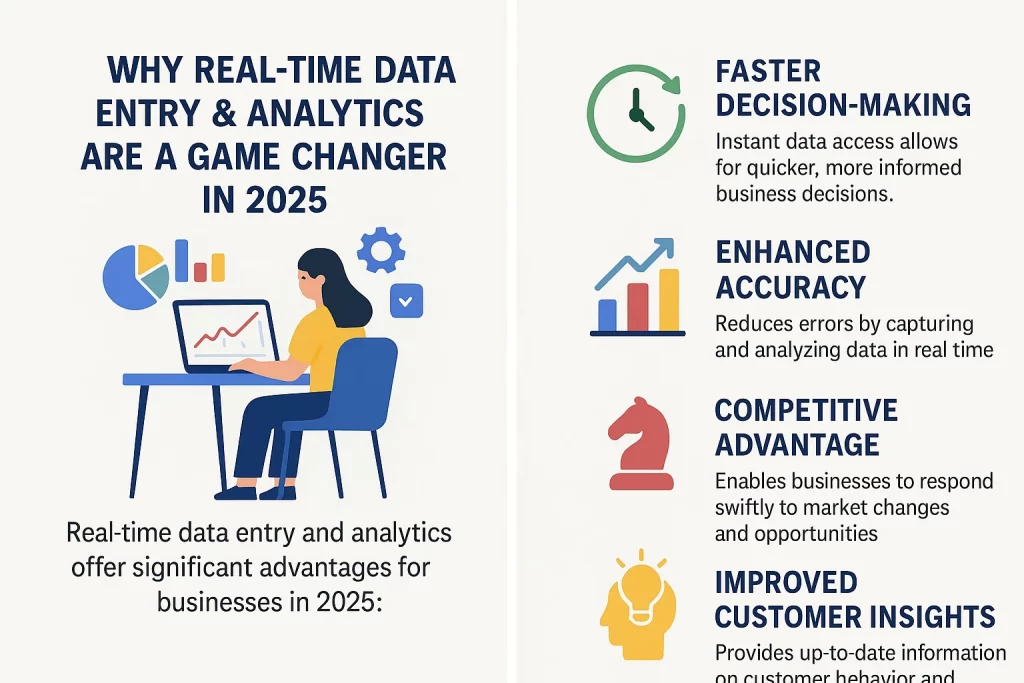
1. Faster, Smarter Decision-Making
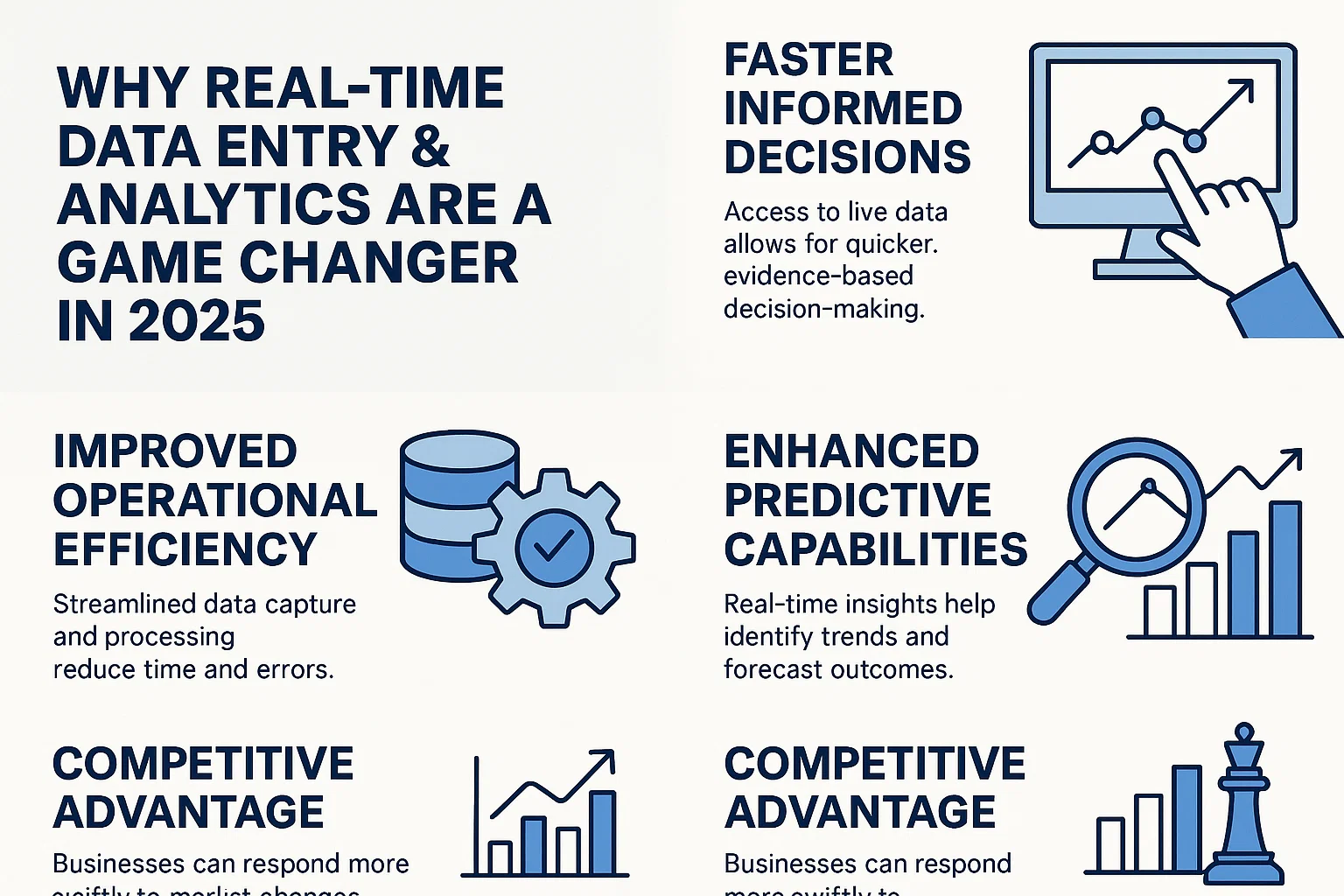
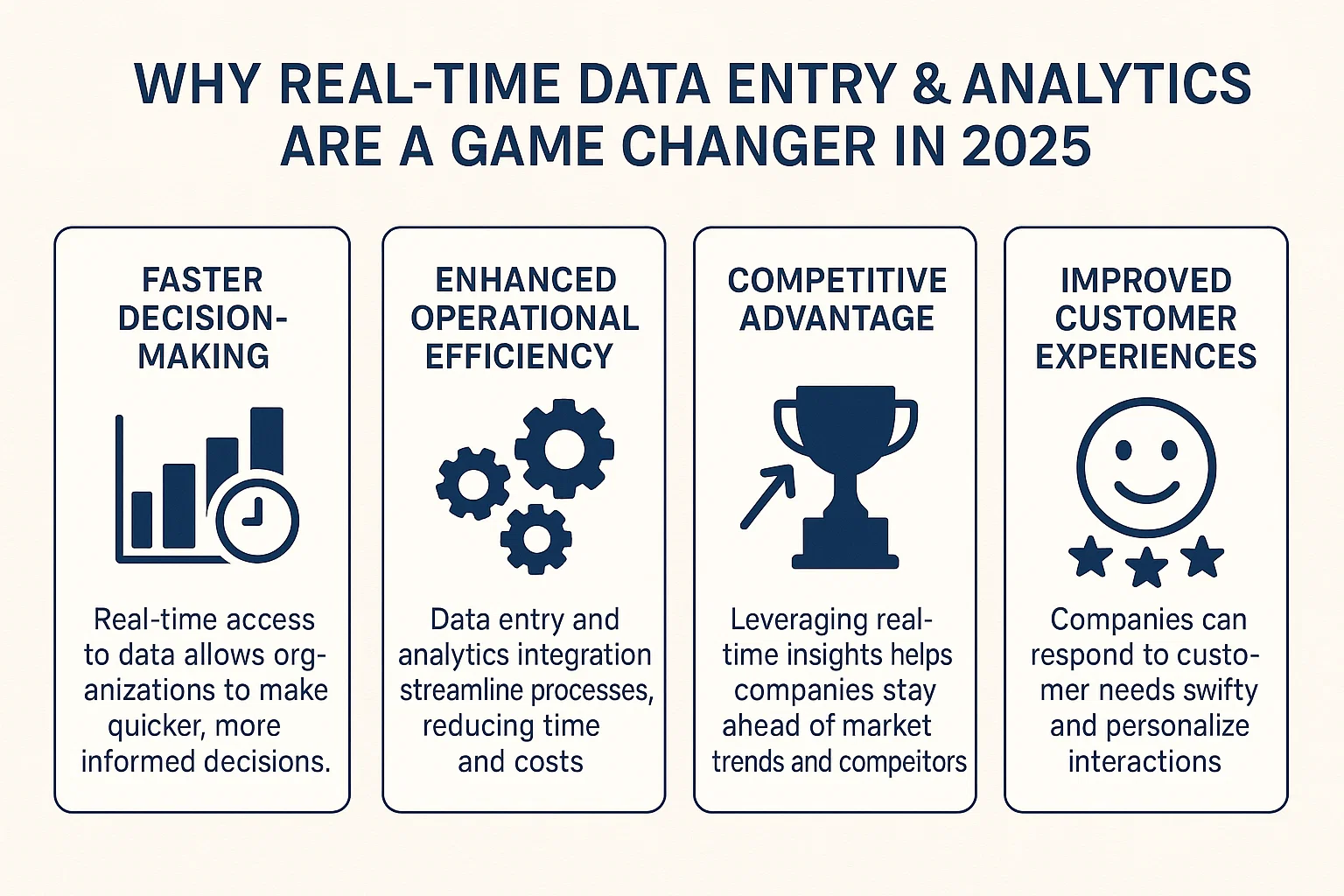
With up-to-the-second data, leaders no longer wait for monthly or even daily updates. Real-time information lets teams spot changes, respond to problems, and capture opportunities right when they appear. In retail, this might be identifying a best-seller to restock before it runs out. For finance, it means stopping fraud as it starts.
2. Higher Operational Efficiency
Manual data tasks are slow and error-prone. Live entry cuts mistakes and lets machines handle heavy lifting. Automation tools streamline workflows, reducing the need for double entry and constant manual checking. This shift leads to fewer errors and a much smoother process for everyone.
3. Enhanced Customer Experience
Real-time data makes customer service more personal and much quicker. Companies can analyze customer behavior instantly and adjust their approach on the fly—like offering custom discounts or recommending products at the right time. Fast response times build loyalty and keep people coming back.
4. Stronger Competitive Edge
The businesses that move fastest win. Real-time data entry and analytics turn speed into a big advantage. Firms can outpace slower rivals by seizing new trends, fixing issues before they spread, and delighting customers in the moment.
5. Significant Cost Savings
Identifying problems the instant they arise keeps downtime and waste to a minimum. Predictive analytics powered by real-time data help avoid expensive breakdowns, cut resource use, and optimize staffing. With instant insight, businesses spend less fixing issues and more time growing.
To see how outsourcing admin and data entry services can help boost both efficiency and savings, check out the advantages of outsourcing data entry for more details.
3. Core Technologies Powering Real-Time Data Entry & Analytics
Internet of Things (IoT)
Sensors and smart devices track and send data in real time. From smart shelves that count stock in a store to medical monitors that check patient vitals, IoT fills systems with a flood of live, useful information.
Cloud Computing
The cloud has unlocked easy, scalable access to vast processing power. Services like AWS Kinesis or Google Cloud Dataflow make it simple to collect and crunch data, no matter how much you have.
Artificial Intelligence (AI) and Machine Learning
AI models, from fraud detection in finance to predictive maintenance in factories, sort through huge amounts of live data and find the important bits. Machine learning keeps these models getting smarter over time.
For a deeper look at how AI is being used in admin support and data processing, see the role of AI in data entry automation.
Edge Computing
Edge devices process data right where it’s collected—the factory floor, the hospital bedside, or next to a wind turbine. This slashes the time between action and reaction, so critical systems can make decisions without waiting for the cloud.
Data Integration Tools
APIs and middleware connect new and old systems, making sure data flows without delays. These tools are the glue that brings together everything from ERP software to warehouse databases.
4. Real-World Applications: How Industries Use Real-Time Data Entry & Analytics
Healthcare
Real-time patient monitoring means doctors get instant alerts for risky changes in heart rate or blood pressure. Hospitals make better staffing and treatment decisions using continuous data, improving patient outcomes and safety.
Retail
Dynamic pricing and instant inventory updates help stores avoid stockouts and boost sales. Live customer data supports tailored marketing, like sending discounts the moment someone abandons an online cart.
Manufacturing
Machines send live status updates so teams can fix problems before breakdowns shut down the line. Automated quality checks use real-time data to catch defects early.
Finance
Banks rely on real-time fraud detection and portfolio tracking. Transactions are flagged, blocked, or investigated within seconds, protecting both the bank and its customers from loss.
Transportation and Logistics
Fleet tracking, route optimization, and supply chain management all rely on live data to keep goods moving efficiently. Problems are addressed on the road, not after a shipment is late.
Smart Cities
Traffic lights, energy grids, and public safety systems now operate based on live sensor data. This leads to smoother traffic, lower costs, and safer, more responsive cities.
For industries looking to automate even more of their admin and back-office tasks, the BPO services overview explains current process automation options.
5. Challenges to Real-Time Data Entry & Analytics in 2025
Data Quality and Accuracy
Fast isn’t always accurate. Bad data at the point of entry leads to wrong results, wasted time, and lost trust. Regular checks, validation rules, and human oversight remain vital.
Complex Infrastructure
Real-time systems need robust networks, reliable servers, and enough bandwidth to handle spikes in activity. This can mean higher costs and more IT support, which smaller businesses may struggle with.
Security and Privacy
Sensitive info, like health records or financial data, needs strong protection. Encryption, real-time access controls, and constant monitoring are standard, and complying with strict laws like GDPR or CCPA is a must.
Integrating with Older Systems
Many companies still run older databases or software that doesn’t play nicely with modern, real-time tools. Custom adapters, careful planning, and phased upgrades are common ways to connect it all.
Workforce Skills
Managing and analyzing live data streams requires updated skills. Training and hiring for these roles is tough—the demand for skilled workers keeps rising.
6. Best Practices for Success with Real-Time Data Entry & Analytics
Clear Data Governance
Assign data stewards, create clear rules for data use, and train staff on ethical guidelines. Strong policies keep systems trustworthy and compliant.
Scalable Technology Investments
Pick tools and platforms that grow with your business. Flexible, modular systems make it easy to add new features without a total overhaul.
Continuous Monitoring
Set up live dashboards and automatic alerts for odd behavior or errors. Catching problems early is cheaper and easier than dealing with major breakdowns.
Department Collaboration
IT, operations, and business teams need to work together. Shared goals and open lines of communication help projects move smoothly and deliver real value.
User-Friendly Interfaces
Simple, intuitive screens make data entry fast and accurate, even for new users. Good training and support help teams adopt new tech with less stress.
7. Future Trends for Real-Time Data Entry & Analytics in 2025 and Beyond
Smarter AI Automation
AI will take over more data capture and analysis tasks, further reducing human effort. Look for smarter bots, voice input, and hands-off controls.
5G and Faster Networks
Ultra-fast connections mean live video, huge file transfers, and constant updates are possible everywhere. This speeds up every part of the workflow.
Stronger Data Privacy
More tools for encryption and anonymizing data protect users and meet tough new privacy standards.
Advanced Predictive and Prescriptive Analytics
Real-time insights will go beyond what’s happening now to predict what’s next and even suggest or automate the best actions.
Augmented Reality (AR) Integration
AR will provide live visual insights, from highlighting machine issues on a factory floor to showing real-time sales trends right on a manager’s dashboard.

8. Top Tools and Platforms for Real-Time Data Entry & Analytics
Best AI Admin Assistant Tools 2025
- Microsoft Copilot: Automates admin tasks, schedules, and reporting.
- Google Duet AI: Combines document management and data analysis in Google Workspace.
- Notion AI: Generates reports and helps automate meeting notes.
- Zoho Zia: AI-powered data entry and workflow automation.
- Zapier with OpenAI: Connects apps for hands-free data syncing.
Leading Real-Time Analytics Platforms
- Tableau: Live dashboards updated with streaming data.
- Power BI: Instant reporting and AI-driven insights.
- Apache Kafka: Event streaming for high-speed, reliable data pipelines.
- AWS Kinesis: Cloud-based platform for real-time data ingestion and analytics.
- Google Cloud Dataflow: Fully managed stream and batch data processing.
Open Source vs Proprietary Options
Open source choices like Apache Flink and Airbyte give flexibility and cost savings. Proprietary platforms such as Microsoft Power BI and Tableau offer support, security, and ease of use for business teams. Consider needs for integration, privacy, and long-term scalability when choosing a solution.
How to Automate Data Entry with AI Free Tools
Many startups turn to free tools like Google Forms’ built-in AI, OpenAI’s GPT models in Zapier, and Python automation libraries. These let you build custom data entry flows at little or no cost, ideal for testing before a full rollout.
When selecting tools, focus on compatibility, ease of use, scalability, and available integrations. Businesses looking for expert-driven admin support can benefit from reviewing a complete admin outsourcing service suite tailored to specific industry needs.
9. Industry Examples and Case Studies
Small and Medium Businesses (SMBs)
Local retailers use AI admin assistants to track inventory and sales daily, adjusting stock orders on the fly. Medical clinics automate patient check-in and appointment reminders, cutting administrative workload by half.
Large Enterprises
Global manufacturers run real-time quality control, flagging defects instantly and reducing waste. Banks rely on instant data entry and analytics for risk assessments, screening millions of transactions for fraud every day.
Startups
Startups harness AI-powered data entry to grow quickly—automating lead capture from social media and using chatbots to handle customer service around the clock.
10. Tips for Newcomers Ready to Start with Real-Time Data Entry & Analytics
- Begin with a small pilot project. Get everyone comfortable with live data before expanding.
- Prioritize security from the first day.
- Invest in staff training and build a growth mindset for using new tools.
- Don’t go it alone—use consultants or outsourced experts to smooth the transition.
11. Key Metrics to Track for Success
- Data accuracy rates—measure errors at input and fix them fast.
- Speed of decision-making—track how quickly your team acts on new info.
- Cost reductions—watch expenses drop as you automate manual work.
- Customer satisfaction—use surveys or NPS to spot gains in service quality.
- ROI—compare costs saved and revenue gained from your new tools.

12. Myths and Misconceptions About Real-Time Data Entry & Analytics
- Only big corporations can afford it—today’s cloud and AI tools fit any budget.
- You need massive budgets—many free or low-cost options exist.
- Real-time analytics is too complex—modern platforms make setup and use much simpler, often by drag-and-drop.
13. Summary: Key Takeaways
- Real-time data entry and analytics turn live business data into immediate action.
- The best AI admin assistant tools 2025 make automation and analytics accessible to every size of business.
- Set clear goals, start small, and focus on training for lasting success.
- Prioritize data privacy and security as regulations grow stricter.
- Automation can cut costs, reduce errors, and improve customer experience—whether you’re in retail, healthcare, logistics, or beyond.
For more practical resources on how to automate data entry with AI free tools or to maximize the value of real-time analytics, explore the full breadth of outsourcing and AI services for admin support.
Real-time data entry and analytics aren’t just buzzwords—they’re practical tools reshaping work as we know it. With the right approach, you can automate the tedious, speed up decisions, and focus on what truly matters for your business in 2025 and beyond.